How to Crack CTET in the First Attempt
Dreamed of cracking CTET in one go? While many think it would be a big deal, with a structured study plan, it is achievable. Before getting into it, let’s start with a number: Child Development and Pedagogy that should wake you up. So, CTET's pass percentage typically sits between 12% and 34% depending on the session and paper.
This means, out of every 100 aspirants sitting in that exam hall, potentially 70 or more walk out without qualifying. And the failure is not because the exam is impossible, but because those students prepared without a plan.
If you don’t want to be one of them, don’t want to sit for this exam twice, and are serious about becoming a teacher, this guide is for you.
Worry not, as there will be no vague motivational talk…
In this guide, we'll walk you through the latest CTET syllabus and exam pattern, recommend the best books for CTET preparation, explain how to effectively use previous year question papers, and share practical preparation tips.
Understand What You're Actually Up Against
CTET is conducted by CBSE and has two papers: Paper 1 for applicants who want to teach students from classes 1–5, and Paper 2 for Classes 6–8. If your goal is to be eligible for both levels, you'll need to clear both papers.
Here's the exam structure at a glance:
|
Detail |
Paper 1 |
Paper 2 |
|
Classes covered |
1 to 5 |
6 to 8 |
|
Exam mode |
Offline |
Offline |
|
Names of subjects |
|
|
|
Total questions |
150 MCQs |
150 MCQs |
|
Total marks |
150 |
150 |
|
Duration |
2.5 hours (150 minutes) |
2.5 hours (150 minutes) |
|
Negative marking |
No |
No |
|
Qualifying marks (General) |
90/150 (60%) |
90/150 (60%) |
|
Qualifying marks (OBC/SC/ST/PwD) |
82/150 (55%) |
82/150 (55%) |
|
Marking scheme |
+1 for correct answer 0 for incorrect answer |
+1 for correct answer 0 for incorrect answer |
|
Language of paper |
English and Hindi |
English and Hindi |
Did you notice something important here? There is no negative marking. However, this fact should change how students approach the exam hall. Meaning, every question they leave blank is a mark they are voluntarily giving up.
That's the kind of information that is buried deep in the CTET syllabus that too many aspirants skim past instead of building their strategy around.
Study Pathway for CTET Preparation
Imagine studying every chapter from your graduation textbooks. You’ll spend months reading topics that are never going to appear in CTET. Instead, study according to the official CTET syllabus.
Focus on the topics specifically mentioned in the syllabus, such as learning theories, inclusive education, child-centered learning, assessment methods, intelligence, and motivation.
This is just one of the smart moves you can start with; the rest are listed below:
Know the Syllabus Cold, Not Just Read It
Knowing the syllabus should not follow a read-it-once approach. Being a student, you should know which sections carry the most weight so you can direct your intellectual energy correctly.
For instance, Child Development and Pedagogy are most important. Plus, they are a non-negotiable chunk of both papers. They are totally conceptual, and you can’t cram that the night before. Therefore, if you're weak here, that's where your first month of preparation should go.
Here is how you can prepare a strategy: (A realistic approach)
Suppose you have 90 days before the exam. Instead of splitting time equally across all five sections, spend your first 30 days on Child Development and Pedagogy plus Mathematics pedagogy. Dedicate the next 30 days to Language and Environmental Studies, and the final 30 days almost entirely to revision and CTET previous year question papers.
Pick the Right Books
One of the biggest first-attempt mistakes is buying five different guides and reading none of them properly. You just need fewer but better resources. When choosing the
best books for CTET preparation, you need to look for these three things:
- Alignment with the current NCTE-prescribed syllabus.
- Solved examples for pedagogy-basedquestions.
- A solid bank of practice sets at the back.
Professional CTET study guides from well-known test publishers usually cover Child Development, both languages, Maths, EVS, Science, and Social Studies in a structured, chapter-by-chapter way, which is exactly how the test is set up.
Given that, here are some of the best books for CTET preparation recommended by experienced educators:
|
Book Name |
Publisher |
Best For |
|
Child Development and Pedagogy for CTET & TETs |
Arihant Publication and Disha Publications |
Paper I and II |
|
CTET & TETs Bhasha Hindi Paper |
Arihant Publication |
Paper I and II |
|
CTET and TETs English Language and Pedagogy |
Arihant Publication |
Paper I and II |
|
A Complete Resource for CTET (Language I) English and Pedagogy |
Geeta Sahni (Author), Pearson Publication |
Paper I and II |
|
Environmental Studies (EVS) Exam Goalpost for CTET & TETs |
Exam Goalpost |
Paper I |
|
Success Master CTET (Social Science /Studies) |
Success Master |
Paper II |
|
CTET Mathematics |
Arihant Publication |
Paper I |
|
Pearson CTET Guide |
Pearson Publication |
Paper I |
|
CTET Language Comprehension |
Arihant Publication |
Paper I and II |
Previous Year Papers Are Non-Negotiable
If there's one single habit that separates first-attempt qualifiers from repeat test-takers, it's solving CTET previous year question papers religiously instead of doing it occasionally.
The reason why it matters the most is that CTET tends to repeat question patterns, not exact questions. And if a student has solved a genuine CTET solved question paper PDF from the last 5 years with answers and walks into the exam hall, he/she will surely recognize those question formats instantly.
Previous papers help you understand:
- Frequently asked topics.
- Difficulty level.
- Time management.
- Question framing.
- Important concepts.
If still not sure how to start, here is how a student can build this into their weekly routine:
- Solve one full CTET previous year question paper with answer key every week. To make it more legit, timed exactly like the real exam (2.5 hours with no pausing).
- After each paper, don't just check your score; you must analyze why you got each wrong answer. Figure out the following: was it a concept gap, a silly mistake, or a language issue?
- Keep a small notebook of every CTET previous year question you got wrong. After completing the whole answer, revisit them the week before the exam.
At the end of the day, this single loop is what mock-test-based preparation is built on. And believe us, this is genuinely the most productive activity in your entire preparation.
Simulate the Real Exam Environment
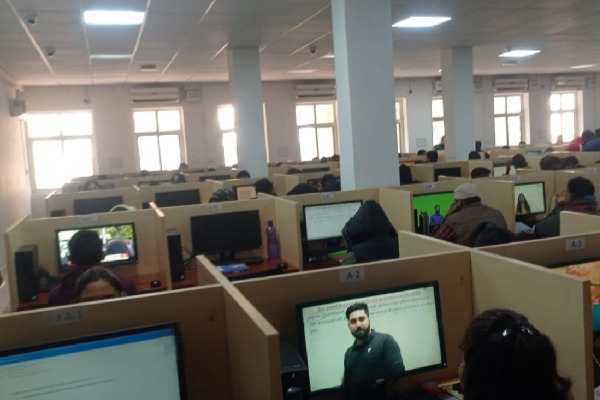
Reading is passive. The CTET exam is active, timed, and mentally exhausting across five sections back to back. And especially if you are first-time sitting for 150 questions in one sitting on the actual exam day, you're already at a disadvantage.
The only way to increase your face is sitting for a full-length CTET previous year paper in exam-like conditions. Start same time of day with no phone and no breaks. Consequently, this will build the stamina and pacing instinct that no amount of chapter reading can replicate.
Master Time Management Within the Exam
With 150 questions in 150 minutes, you have exactly one minute per question. And there is a well-known fact that not every question deserves one minute because language and reading comprehension passages take longer than expected.
In contrast, once you know the theory, it can be answered in 20-30 seconds. The trick here to tackle the situation is what you have learnt in your school days.
Go through the entire paper once and answer everything you're sure of first. This alone will cover 60-70% of the paper under half the total time. Up next, return to the harder or longer questions with the time you’ve saved so far.
Pro Tip 💡: Since there's no negative marking, never leave a question unanswered, even if it means an educated guess in the final minutes.
We’ve provided a sample daily study schedule along with exam execution with time stamps:
|
Time Slot |
Activity |
|
7:00–8:00 AM |
Child Development & Pedagogy |
|
10:00–11:00 AM |
Language Practice |
|
2:00–3:00 PM |
Mathematics/EVS or Subject Paper |
|
Evening |
Solve Practice Questions |
|
Night |
Revise Weak Topics |
Similarly, if your exam is of 150 minutes, then manage the exam-day time allocation in the following way:
|
Time |
Task |
|
0–45 min |
Attempt all easy and direct questions |
|
45–105 min |
Solve moderate and comprehension-based questions |
|
105–135 min |
Attempt difficult questions |
|
135–150 min |
Review answers and attempt any remaining questions |
Following this strategy can significantly improve both accuracy and time management, helping you maximize your CTET score.
Common Reasons Aspirants Fail on Their First Attempt
Many students fail not because the exam is difficult, but because of avoidable errors. Those are listed below:
- Starting Too Late: It is uncommon for a syllabus this extensive to be completed in a mere 15–20 days.
- Ignoring Pedagogy: Many candidates focus only on subject knowledge and underestimate the child-development and teaching-method questions. Doing so can make them leave a large yet decisive chunk of both papers.
- Skipping Previous Year Analysis: Reading theory without ever timing yourself against a real CTET previous year paper leaves you unprepared for exam-day pressure.
- Leaving Questions Blank: With zero negative marking, an unanswered question is a pure lost opportunity.
How MC Saxena Can Help You Crack CTET in One Attempt
Preparing alone, without expert guidance or a structured system? Not a great idea. It is exactly where most first-attempt aspirants lose time and confidence.
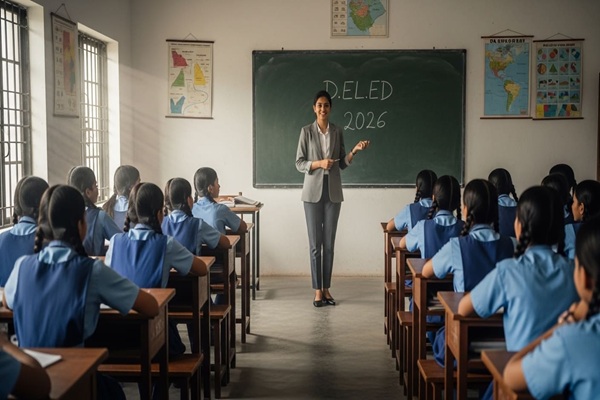
MC Saxena, Lucknow, offers an academic environment that is designed with students in mind. We help aspiring teachers prepare confidently for competitive examinations like the one we are talking about here, i.e., CTET.
We allocate our focus to conceptual learning rather than rote memorization. Besides preparation assistance, we help students in the following ways:
- Experienced faculty with expertise in teacher education.
- Regular classroom sessions for conceptual clarity.
- Practice through mock tests and topic-wise assessments.
- Guidance for selecting the best books for CTET preparation.
- Doubt-solving sessions to have a strong hold on weak areas.
- Practice using CTET previous year question papers to familiarize students with the exam format.
- A disciplined learning environment that encourages consistency and confidence.
Irrespective of whether a student is preparing alongside their graduation or revising after completing their studies, we can make their preparation more focused and efficient.
Final Thoughts
Cracking CTET in one attempt isn't a game of luck, it’s about hardcore dedication towards studying in a smarter way. Rattafication won’t lead you anywhere, especially with CTET. One must respect the syllabus and practice with real previous year papers or study materials.
Remember, every CTET previous year question teaches you something about the examiner's approach. The more you practice, the more confident you'll become.
FAQs
Q1: What is the CTET exam date 2026 for the September session?
A: CBSE will soon conduct the CTET exam on September 6, 2026. Therefore, this September session of the CTET will be held offline.
Q2: How much time is sufficient for CTET exam preparation?
A: Around 2-3 months are required for complete CTET exam preparation. It must be followed by dedicated study and practice of question papers. Despite this, the preparation period also depends on the candidate’s conceptual clarity of the topics.
Q3: How can I get the CTET exam Syllabus PDFs?
A: For that, you have to visit the official site, i.e., ctet.nic.in, and check the information bulletin to download the PDF of the CTET Syllabus.
Q4: Is 120 a good score in CTET?
A: Yes, 120 is quite a good score. If not achieved, the candidates are supposed to achieve minimum qualifying marks, i.e., 90 marks (60% for general candidates) and 82 marks (55% for reserved categories).