College Admission Counselling Tips in India: A Complete Guide for First-Time Applicants
If you're reading this, you're probably anxious about your college admission. Maybe excited. Likely both.
In India, the admission process isn’t that easy, especially when the competition is this high. Think of it as if you are competing against 2.6 million applicants annually for limited seats. In addition, the college admission process in India involves multiple entrance exams, ranked merit lists, and a counselling phase that terrifies most first-timers.
Besides all these operations, 71% of first-time college applicants make costly mistakes during admission. And you know what? Many of them are preventable.
This guide exists because you deserve to navigate this process without unnecessary stress or regret.
The Challenges So Far…
Awareness is your biggest advantage during admissions. Let’s take a moment to look at the most common challenges students face so you can avoid them and stay one step ahead:
- Only 32.8% of eligible Indians attend college.
- 23% of first-time college applicants miss critical registration deadlines, putting their admission opportunities at risk.
- Counselling-related mistakes cost applicants approximately ₹50,000-2,00,000 in lost opportunities.
- 41% of first-time applicants report feeling overwhelmed by the complexity of India's admission counselling process.
- Wrong choices during counselling lock students into unsuitable programs for 4+ years.
Being a first-timer, your challenge is to navigate how to apply for college in India while managing expectations, timelines, and hundreds of eligibility criteria.
Master the College Admission Process in India Step by Step
Whether you’re applying through entrance exams, merit-based admissions, or counselling, having a grasp of the Indian college admission process will make you feel confident and help you make wise decisions.
We’ve broken down the process into simple steps:
Step 1: Choose Your Exam Path
There are different exams for different dreams and different competition levels. For example, students can choose from:
|
Exam Path |
Popular Courses |
Yearly Applicants |
Yearly Seats |
|
JEE Main/Advanced |
Engineering (B.Tech/B.E.) |
1.2 million |
16,000 IIT seats |
|
NEET |
MBBS, BDS, and Healthcare Programs |
1.6 million |
66,000 government seats |
|
CUET |
Central and Participating Universities |
2.4 million |
No fixed national seat count, as it varies by university |
|
State-level exams |
State Universities and Professional Courses |
Varies by state |
Varies by state |
Now, the average preparation time is 12-18 months for competitive exams. Keep in mind, students, starting late will cost you fewer benefits, but starting early (in class 11) gives you 2+ years, which can be a massive advantage for your preparations.
After their exams, when students have received their results, the next battle starts right after that. We are talking about the battle of getting into their dream college for higher studies.
Step 2: Understanding College Admission Tips for Students
According to the All India Survey on Higher Education (AISHE), India has over 1,100 universities and more than 43,000 colleges. Given that, we will be discussing admission tips side-by-side with the admissions process.
Tips That Can Clear All the Confusions
The best way to avoid unnecessary stress is to keep these tips in mind:
Understand the College Admission Process
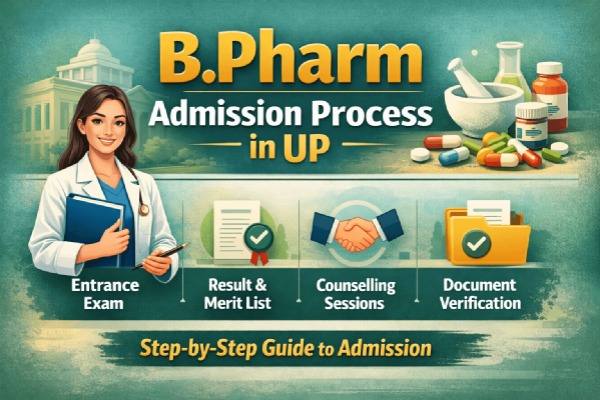
Before filling out application forms, a student should always understand the college admission process in India. Although the procedures vary by university and course chosen, most admissions follow these stages:
- Registration and application submission phase.
- Entrance examination.
- Merit list or entrance score declaration.
- Counselling
- Choice filling.
- Seat allotment.
- Document verification.
- Fee payment and admission confirmation.
Remember, government and private institutions conduct admissions through centralized counselling. On the contrary, other institutions usually have institution-specific admission procedures. Missing even a single deadline may result in losing your preferred seat.
Register on Official Portals Early
Normally, registrations start 2-3 weeks before the start of counselling. If you wait too long to register, you may not get as many slots or choices. And remember, many colleges give priority admission to early birds.
Prepare Complete Documentation Immediately
Keep all academic documents ready even before the registrations begin because missing even one document (be it board marksheet, caste certificate, disability certificate, or medical fitness certificate) cancels entire counselling participation. In reports, it is also found that 18% of applicants face delays due to incomplete paperwork. Prepare everything in advance.
Pro Tip 💡: Use the same personal details across all application forms and maintain a checklist of important dates.
Calculate Your Eligibility Realistically
Don't hope that your rank will get you into a prestigious university. Students are supposed to keep checking the previous year's cutoffs. Also, a lot of students only consider college rankings, but other aspects like industry partnerships, internships, infrastructure, faculty quality, placements, and industry collaborations should also play a role.
So, figure out what your real chances are before making up your mind. Thus, when evaluating yourself, be brutally honest.
List Preferences Strategically
Your preference list, including 100-500 colleges, literally determines what you actually get. Putting dream colleges first, followed by random choices, is surely a way towards disappointment. Strategic listing is about considering your realistic rank, college demand patterns, branch preferences, and geographic preferences.
Understand the Counselling Process Carefully
The counselling process India is one of the most necessary stages of admission. This is where students submit their preferred colleges and courses based on eligibility and entrance rank. At this point, a student must arrange their choices based on their genuine interest rather than assumptions about cut-offs.
Compared to overcrowded tier-1 colleges, tier-2 and tier-3 colleges also offer higher-quality instruction, more individualized faculty attention, and better placement opportunities. The quality and infrastructure of education are more important than brand names.
During counselling, we advise students to:
- Fill in as many preferences as possible that they are eligible for.
- Review every choice before locking it.
- Keep an eye on official updates for new rounds.
- Follow document verification on time.
- Monitor counselling portals regularly.
Understand Merit List Generation
Students merit a certain position based on their rank, category (General/OBC/SC/ST), gender, and region. Someone with a certain rank might not be able to get into another state. That's why understanding this cuts out unnecessary spots.
Get to Know the Critical Concept of Float and Freeze in Counselling
Well, this single concept separates mindful students from confused ones. Misunderstanding float vs freeze in counselling can cost you opportunities. That being said, here's a simple explanation of both:
-
Freeze: This means a student has accepted their allotted seat and is not going to participate in further counselling rounds. Since you must report to and join that college by a specified date, choose the option to freeze if you're fully satisfied with your allotted college and course.
-
Float: The idea is that your assigned seat is not yet sealed, and you can still get better preferences in subsequent rounds. But if in later rounds you get a better college, you can upgrade to it. The only negative aspect of this option is that a student could lose their present seat if they do not report by the deadline.
Why Does MC Saxena Stand Apart From Generic Guidance?
MC Saxena isn't just another institution. We've specialized in first-time applicant guidance and counselling support for 15+ years. Since our inception, we’ve successfully guided 25,000+ applicants, and the numbers are still growing.
Don’t trust what we are saying; instead, read what our ex-students got here:
-
Expert Counselling Guidance: Our admission counsellors have personally processed over 25,000 applicants. They don't just explain the process robotically; they anticipate problems before they happen and guide you proactively.
-
Personalized Preference Strategy: While you can get generic guidance online, the team of MC Saxena analyzes your specific rank, branch preference, location issues, career goals, financial situation at the moment, and long-term goals. After hearing about them all, we come up with a personalized strategy.
-
Real-Time Round Support: Our staff keeps an eye on seat distributions, cutoff patterns, your position, and the competing candidates' movements. Moreover, we provide you with live data and historical patterns to assist you in making a decision regarding whether to float or freeze.
-
Documentation Perfection: To avoid any misconduct and document issues later, we verify every document before submission. We've never had applicants face rejection due to paperwork. And that's 15 years of perfect documentation support.
-
Post-Admission Support: Don’t think the journey ends after successful enrollment. We even provide post-admission support with transition guidance, course selection support, internship counselling, and whatever you ask for.
The Wrap Up
Now that we are about to wrap up this blog, we have to say that getting admission to the right college builds the foundation for your future. First-time admission seekers get overwhelmed because the information landscape is chaotic.
Nobody tells you how college admission tips for students actually work in practice. The college admission process in India looks simpler in textbooks than in reality. So, you need someone who knows what works and what doesn't.
The team of MC Saxena understands that your admission shapes your next 4+ years, and your higher education journey must start with confidence.
FAQs
Q1: What are the top 10 rules when applying for college?
A: College students need to concentrate on these ten key guidelines, which include picking out coursework, showing academic progress, focusing on extracurricular activities, showing passion for their major, writing an engaging personal essay, applying to a balanced list, keeping strong recommendations, meeting deadlines, exploring specific requirements, and proofreading everything.
Q2: How to improve my chances of admission?
A: Strong grades, volunteer and service learning, interesting extracurriculars, and great test scores are a few factors that admissions officers consider.
Q3: What is the biggest factor in college admission?
A: The most significant factor in college admission decisions is a student’s grades in college-preparatory classes.
Q4: Do we need a 10th marksheet for college admission?
A: Yes, for college admission, you’ll need a 10th-grade marksheet, as it is a mandatory document used as official proof of your date of birth, name spelling, and secondary education completion.
Q5: How to make the perfect college list?
A: First, get to know what specific qualities you want in a college, and then start making a list of colleges and organizing them by “maybe” and “likely”. At the end, narrow down your results into your final list of colleges.